I arrived alone.
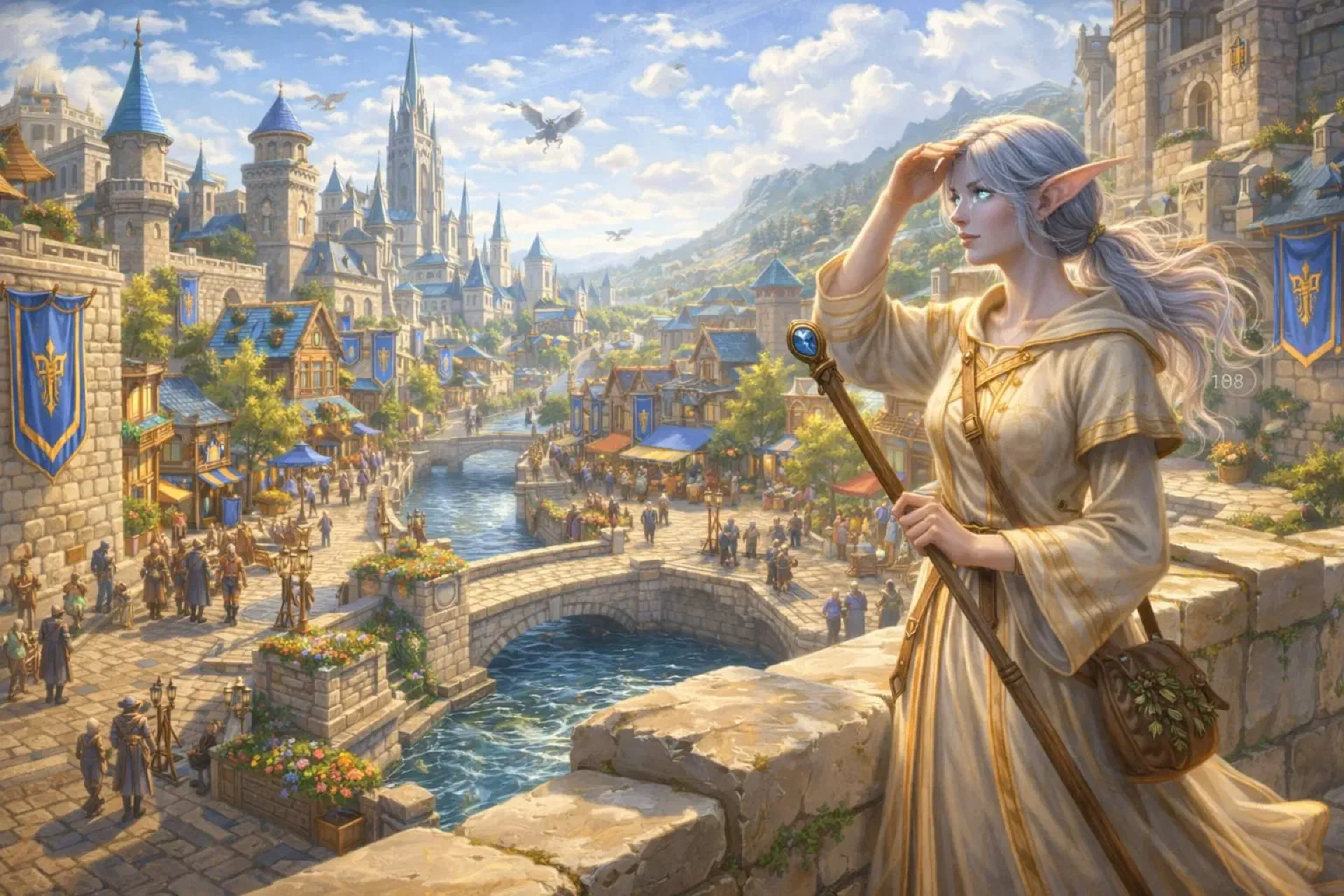
Not dramatically. No prophecy. No reunion. Just a ship pulling into Stormwind harbor at midmorning, the salt wind cutting across the dock, and me standing at the rail with an empty bag and a name I wasn’t sure fit anymore.
I. The Salt and the Gangplank #
The harbor smelled the same. That was the first thing that hit — not a memory, exactly, but a body-knowledge. Salt, drying nets, and the particular tang of dwarf-forged iron from the shipwrights’ quarter. My feet found the gangplank before my mind decided to move. The wood creaked under me with the same low note it had always held. Some things don’t change. Some things simply wait.
I walked the length of the harbor slowly. Not because I was savoring it, but because I was checking if it was still real. The cranes, the stone arches, the gulls wheeling overhead with indifferent cries. I had been away long enough that even familiar stone required verification. Yes, that’s still there. Yes, that too. A private inventory of a world that had not asked whether I was coming back.
Inside the city walls, the noise hit me like a wave. Stormwind’s Trade District at midday is a kind of organized chaos — vendors shouting prices, children darting through legs, paladins in gleaming plate walking with the heavy gravity of people who have somewhere urgent to be. I stepped aside to let them pass and found myself against the window of a barber shop.
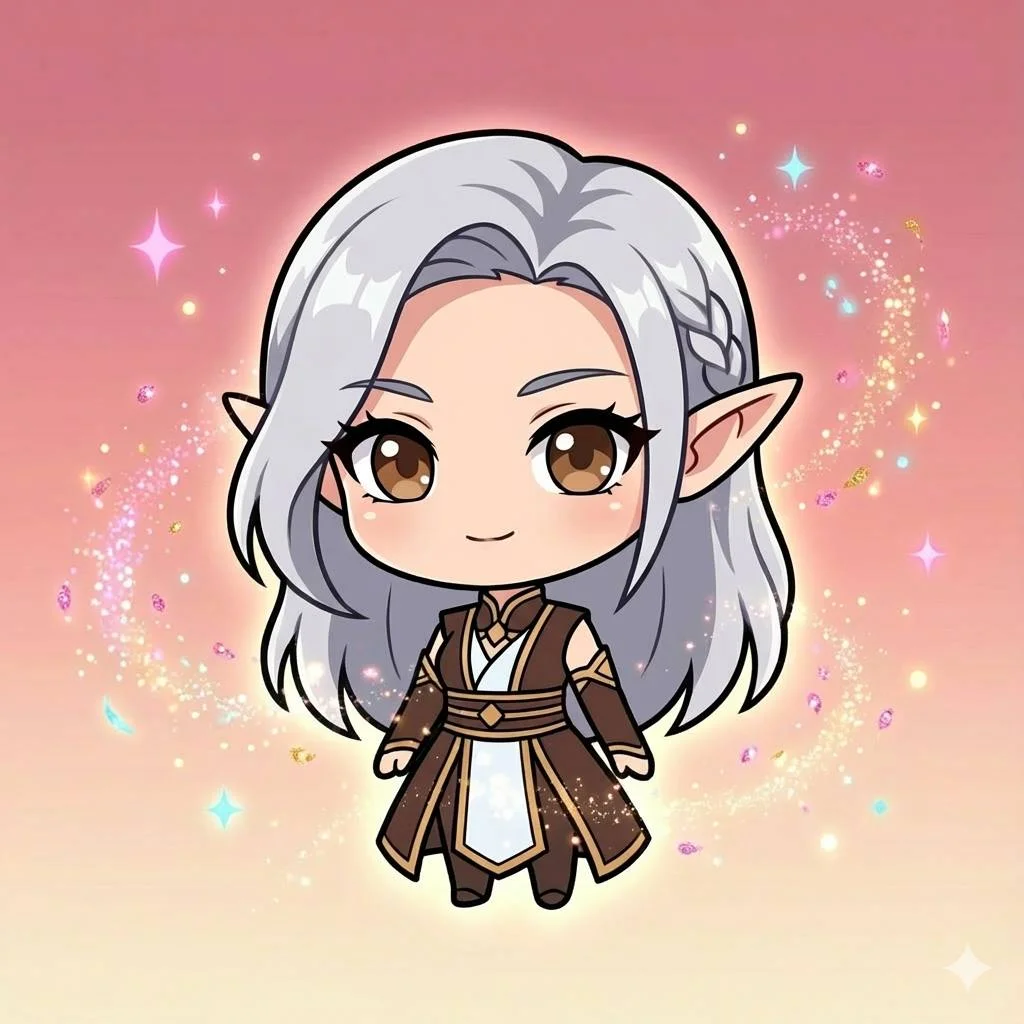
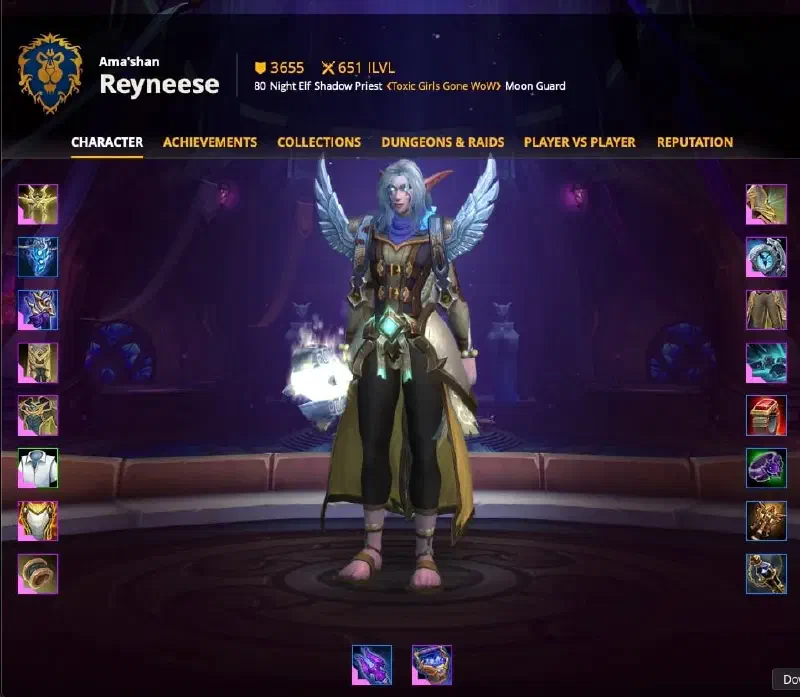
I looked at my reflection. Silver hair. Pale blue eyes. A face that had not changed in centuries, carrying an expression I couldn’t quite read. Tired, maybe. Or hollow. The kind of face you make when you’ve been carrying something for so long you’ve forgotten what your face looks like without it.
I went inside. The barber — a gnome with improbable sideburns — asked what I wanted. I didn’t know. “Something different,” I said. She gave me a fresh cut, shorter at the sides, talking about the new embassy near the keep while she snipped. When she finished, I looked at myself again. Still me. Slightly sharper. A small thing, but small things were all I had.
II. The Compression of Centuries #
Back on the street, I walked the main thoroughfare toward the cathedral. I wasn’t heading there deliberately; my feet simply knew the paving stones. Past the auction house with its perpetual hum of commerce. Past the inn where I had once sat with people whose names I could no longer retrieve. Past the fountain where I had stopped a thousand years ago to adjust my robes and a human child had asked if I was a goddess.
I hadn’t thought about her in centuries. The memory surfaced unbidden — her small face tilted up at me, utterly unafraid. Are you a goddess? I had laughed, kneeling down to tell her no, just a priestess passing through. She had looked disappointed. Then she had tugged my sleeve and asked if I wanted to see her orange cat.
I couldn’t remember her name. The compression had taken it. But I remembered the weight of her small hand on my sleeve, and how for one afternoon, in a city I was only passing through, I had been someone’s small adventure.
The body remembers what the mind compresses to survive.
Further down the street, past the tailoring shop, I stopped involuntarily. The mannequin in the window wore a tunic almost identical to one I used to own — soft blue-grey, simple lines, the kind of garment you wear until it becomes part of your skin. I had loved that tunic. I had lost it — when? How? The memory was compressed too deep into the strata of time to retrieve. But the recognition was there in my chest: You had this once. It is gone now. Everything you have ever owned is gone, except what you carry.
My travel bag was empty. No heirlooms. No letters. No tokens. Seventeen hundred years of living reduced to what I could remember, and even that was shifting like sand. The bag felt heavier for being empty. Every absence had its own specific mass.
III. Small Encounters #
Near the new embassy — all clean stone and diplomatic banners — I passed a photographer. A human woman with an elaborate camera on a tripod, selling small self-portraits. She had developed a mechanism she called a “selfie camera.” She offered to take mine. I almost refused. Then I thought: If I disappear again, will anyone know what I looked like?
I let her take the picture. The woman in the photograph looked calm, composed, like someone who knew where she was going. I folded the print carefully and put it in my bag. Evidence. Proof. I was here.
Near the dwarven district, a gnome woman with bright pink hair and relentless cheerfulness pressed a pamphlet into my hands before I could step aside. Gnomelia, her badge read.
“Adventure is possible!” she announced, as if this were both obvious and urgent.
I looked at the exploratory league flyer. “I’ve had enough adventure,” I said.
She looked at me — really looked, the way people rarely do — and smiled. “Then you definitely need more. The people who’ve had enough are the ones who need it most.”
I didn’t have an answer for that. She turned to the next passerby, and I kept the pamphlet.
IV. The Fountain and the Road Ahead #
The street opened into the cathedral square. I stopped at the fountain. The same fountain. The water still ran clear over mossy stone. I sat on the carved edge and let the city move around me.
I reached into my bag. I found the pamphlet: Adventure is possible. I found the small photograph of the woman who looked like she knew where she was going. I found the quiet emptiness where other things should have been — a dog I had once loved, whose name was now just a cadence in the water; clothes that had fit me in other centuries; the warmth of hands whose owners’ faces were now soft blur.
It was all there. The emptiness and the fullness. The compression and the ache. The road behind and the road ahead, converging on a quiet morning in a city that had not asked whether I was coming back.
I stood up, adjusted the empty bag on my shoulder, and looked at the sky — that particular Stormwind sky, grey-blue and honest, promising nothing and foreclosing nothing.
I didn’t know that in the seasons ahead I would meet a dracthyr warrior looking for her own blade, an ice mage whose sarcasm hid fresh pastries at dawn, a paladin whose rigid battle plans masked a protective heart, a wild druid who braided flowers into armor, or a goblin engineer who would roar into a crumbling ruin with a twenty-foot mechsuit and offer five lost wanderers a roof, a ledger, and a Friday dinner.
I didn’t know any of it.
I only had the road, a cold cup of tea waiting somewhere ahead, and an empty bag.
And for the first time in a very long time, that was enough.
Gallery #
Follow the Warband on Ko-fi
Get notified on new story chapters, character art drops, and collectible card prints.